Miss You in Morse Code

-- .. ... ... / -.-- --- ..-
"Miss you" is the casual, everyday cousin of "I miss you" — the version you'd text a friend, a sibling, or a partner without ceremony. As -- .. ... ... / -.-- --- ..-, it drops the opening "I" for a warmer, more conversational feel. It fits neatly on jewelry and makes a sweet two-word tap to send when someone crosses your mind.
Letter-by-Letter Breakdown
| Letter | Morse | Sound (di / dah) |
|---|---|---|
| M | -- | dah-dah |
| I | .. | di-dit |
| S | ... | di-di-dit |
| S | ... | di-di-dit |
| / | word gap | |
| Y | -.-- | dah-di-dah-dah |
| O | --- | dah-dah-dah |
| U | ..- | di-di-dah |
Just two words. "Miss" leads with M's two dashes, then tumbles into the dots of I and a doubled S, ending on a soft patter of short signals. "You" answers with -.-- --- ..-, the dash-heavy Y and O giving it a longer, slower close. The phrase moves from quick dots to drawn-out dashes, like a sigh.
How to Send “Miss You” in Morse Code
Because it's only two words, "miss you" suits a short bracelet or a small engraved bar without crowding. Friends sometimes use it as a private check-in: a single flashed or tapped "miss you" needs no explanation. It's also an approachable practice phrase, since the repeated S in "miss" helps you lock in the sound of three quick dots.
Type it
Enter "Miss You" in any Morse translator to see -- .. ... ... / -.-- --- ..- appear instantly — the fastest way to check the pattern.
Tap it
Tap the rhythm on a hand or table: short taps for dots, longer presses for dashes, with a clear pause between letters.
Blink it
Signal it with your eyes or a subtle nod — quick for a dot, held for a dash — a silent way to pass "Miss You" across a room.
Flash it
Use a flashlight or phone light: a brief flash is a dot, a long flash is a dash. Press Play above to hear the timing first.
Frequently Asked Questions
What is "miss you" in Morse code?+
"Miss you" in Morse code is -- .. ... ... / -.-- --- ..- . It is the shorter, more casual form of "I miss you," leaving off the opening I. The slash separates the two words, and the doubled S in "miss" gives the phrase its quick, pattering middle.
Should I use "miss you" or "I miss you" for a gift?+
Both work; the choice is about tone and space. "Miss you" is shorter and more relaxed, ideal for a compact bracelet or a casual keepsake between friends. "I miss you" feels a touch more formal and heartfelt, which can suit a romantic or long-distance gift.
Morse Code Gift Ideas
As an Amazon Associate, Morse.Cool earns from qualifying purchases.
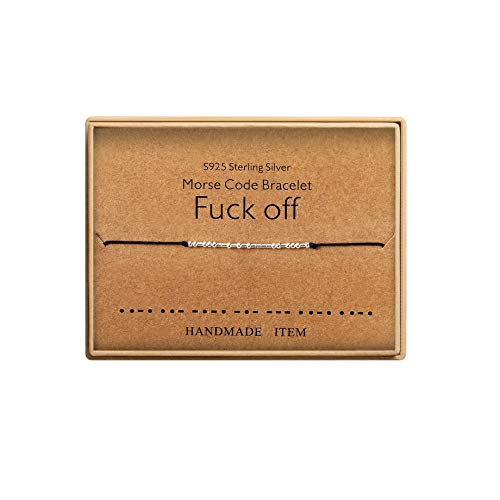
As an Amazon Associate we earn from qualifying purchases.

As an Amazon Associate we earn from qualifying purchases.

As an Amazon Associate we earn from qualifying purchases.
Related Phrases
Translate your own message
Type any text and hear it in Morse code instantly — free, no sign-up.
Open the Morse Translator →